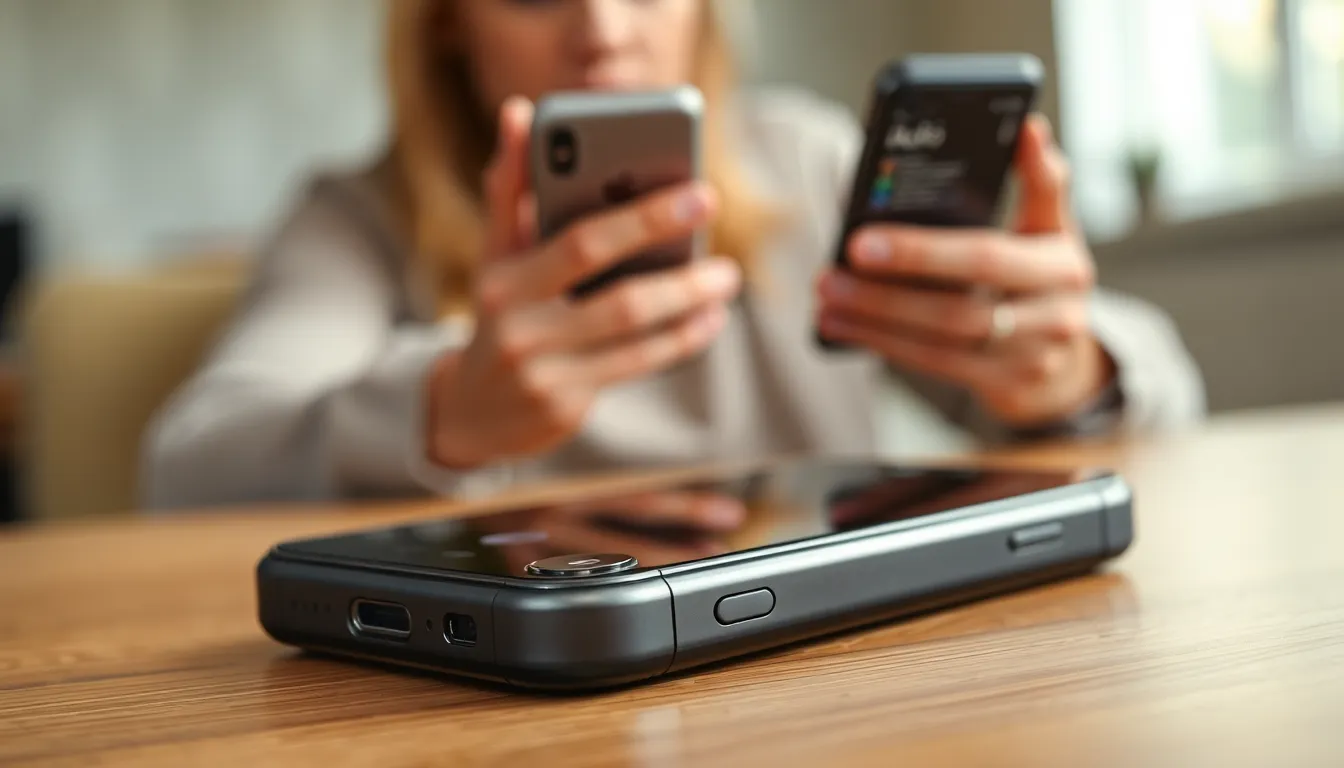
Ever found yourself in the middle of a phone call, only to wonder where the heck the speaker is on your iPhone? It’s like playing hide and seek with a device that should be your trusty sidekick. Fear not! This little guide will help you uncover the mystery behind this elusive feature without the need for a magnifying glass or a detective hat.
Understanding iPhone Speaker Placement
Locating the speaker on an iPhone is straightforward once users understand the design. Each iPhone model features specific placements that enhance audio output for calls and media.
The Basics of iPhone Design
Smartphone design prioritizes user experience, with speakers crucial for sound delivery. Typically, the speaker is integrated into the chassis, offering a sleek appearance while ensuring audio clarity. Modern iPhones utilize advancements in technology to optimize speaker efficiency and sound quality. Ergonomic considerations influence speaker placement, making accessibility effortless during calls, gaming, or listening to music.
Speaker Location on Different Models
Speaker placement can vary among iPhone models, impacting user interaction. On iPhone 12 and newer, speakers are located at the bottom, ensuring clear sound when held horizontally or vertically. The iPhone SE (2nd generation) also features bottom speakers, similar to recent models, enhancing audio performance. Older models, like the iPhone 7, incorporate speakers in the same area but may lack the advanced sound technology of current versions. Understanding these differences allows users to adjust their handling for optimal sound quality.
Sound Quality and Performance
Sound quality on iPhones significantly impacts user experience during calls, gaming, and music playback. Various factors contribute to audio performance on these devices.
Factors Affecting Sound Quality
Environmental elements, such as background noise and space acoustics, play a critical role in sound clarity. Audio sources also influence the experience; high-quality files yield better results than compressed ones. Phone settings, including volume control and equalizer adjustments, affect output as well. Distortion might occur at high volume levels, impacting overall enjoyment. Users often notice that calling quality depends on network conditions and signal strength.
Comparing iPhone Speakers Across Generations
Speaker technology has evolved across iPhone generations, enhancing audio performance. The iPhone 7 introduced stereo speakers, improving sound directionality. Subsequent models, starting with the iPhone 12, repositioned speakers for better audio delivery. Modern iPhones often feature spatial audio capabilities that enhance immersion. Users typically experience richer sound profiles with improved bass and clarity on newer models. Comparing the iPhone 12 to earlier versions reveals noticeable advancements in both hardware and software optimizations.
Troubleshooting Speaker Issues
Speaker problems can disrupt audio experience on an iPhone. Identifying these issues early enhances usability.
Common Problems Users Encounter
Users often report low sound levels during calls. Another frequent issue involves distorted audio, which makes voices hard to understand. Some experience complete silence when playing media despite confirming volume settings are adequate. Environmental factors like background noise can also contribute to speaker performance difficulties. Occasionally, the speaker may become obstructed by debris or cases, impacting sound output. Various iPhone models might exhibit unique issues depending on the era of design.
Solutions to Improve Speaker Performance
Cleaning the speaker area with a soft brush addresses dirt-related problems. Adjusting the volume settings using the physical buttons can immediately enhance sound levels. Restarting the device eliminates possible software glitches affecting audio. Disabling Bluetooth can help, especially if the phone connects to another audio device. Switching audio sources, like moving from an app to the music player, may resolve playback issues too. Lastly, ensuring software is up to date can bring improvements and fixes to speaker functionality.
Locating the speaker on an iPhone is essential for an optimal audio experience. With advancements in technology and design across different models, users can enjoy clearer sound and improved performance. Understanding speaker placement and functionality can greatly enhance everyday tasks like making calls or listening to music.
By addressing common audio issues and implementing simple troubleshooting steps, users can ensure their iPhone delivers the best sound quality possible. Staying informed about these features not only enhances usability but also enriches the overall experience with the device.